
Those chalky circles on your doors and windows usually show up overnight. A sprinkler head swings a little too far, the morning sun dries the drops, and the minerals stay behind. Around St. Augustine, where cars often park in driveways next to lawns that get watered regularly, sprinkler spots are one of the most common things we're asked to fix. Some come off in minutes. Others have etched into the clear coat and need paint correction. Here's how to tell the difference and what to do about each.
Fresh water spots are minerals left behind when water evaporates. Most come off with a dedicated water-spot remover used on cool paint, then a rinse and protection. If the outline remains after cleaning, minerals have etched the clear coat, and only machine polishing will level it. Moving away from sprinklers and drying the car properly prevents repeats.
Why Water Leaves Spots
All tap, well and irrigation water carries dissolved minerals such as calcium and magnesium. When a droplet evaporates, the water leaves but the minerals don't. What's left is a thin ring or dot stuck to the surface.
Sprinkler water tends to be the worst offender. It hits the car repeatedly, often early in the morning, and then the sun bakes it dry. Irrigation sources vary across Northeast Florida. Some homes use private wells, and some neighborhoods use reclaimed water for landscaping, and either can leave heavier residue than you'd expect. Fertilizer and soil splashed up from the lawn can add to the mess.
Heat speeds everything up. A dark car sitting in the summer sun can get hot enough that minerals start to bond and, over time, etch the clear coat. That's why spots you ignore for a few weeks behave very differently from spots you catch the same day.

The Three Levels of Water Spots
Detailers generally sort water spots into three stages. Knowing which one you have tells you how to fix it.
| What it is | How it's fixed | |
|---|---|---|
| Surface deposits | Fresh minerals sitting on top of the paint or glass | Wash, then a quick detailer or water-spot remover |
| Bonded minerals | Deposits that have hardened and won't wash off | Water-spot remover, clay treatment, then protection |
| Etching | Minerals have eaten a shallow ring into the clear coat | Machine polishing (paint correction) |
A simple test: clean the area well and look at it in the sun or with a flashlight at an angle. If you still see the outline of the spot as a faint ring, even though the surface feels smooth and clean, it's probably etched.
How to Remove Fresh and Bonded Spots
Start with the gentlest option and only step up if you need to. Work on one panel at a time in the shade.
Wash the car
Use a pH-balanced car shampoo and rinse well. Dirt on top of the spots will scratch the paint if you start rubbing.
Try a quick detailer first
Mist a spray detailer on a small area and wipe with a clean microfiber. Very fresh spots often lift right away.
Use a dedicated water-spot remover
These products are made to dissolve mineral deposits without harming clear coat. Test in a hidden spot, apply to a cool panel, and follow the label's dwell time exactly.
Rinse thoroughly and dry
Mineral removers shouldn't be left on paint. Rinse, then dry with a soft towel or a blower.
Clay if anything remains
If the area still feels rough, a lubricated clay bar can pull off what's left. Our clay bar guide covers how to do it safely.
Protect the paint
Finish with wax, sealant or a coating. Protected paint is far harder for minerals to grip.
Some people reach for a diluted white vinegar solution. It can work on light deposits, especially on glass, but test it first, keep it off hot surfaces and trim, rinse thoroughly afterward, and never combine it with other cleaners. A product made for the job is usually the safer choice for paint.
When Spots Have Etched Into the Paint
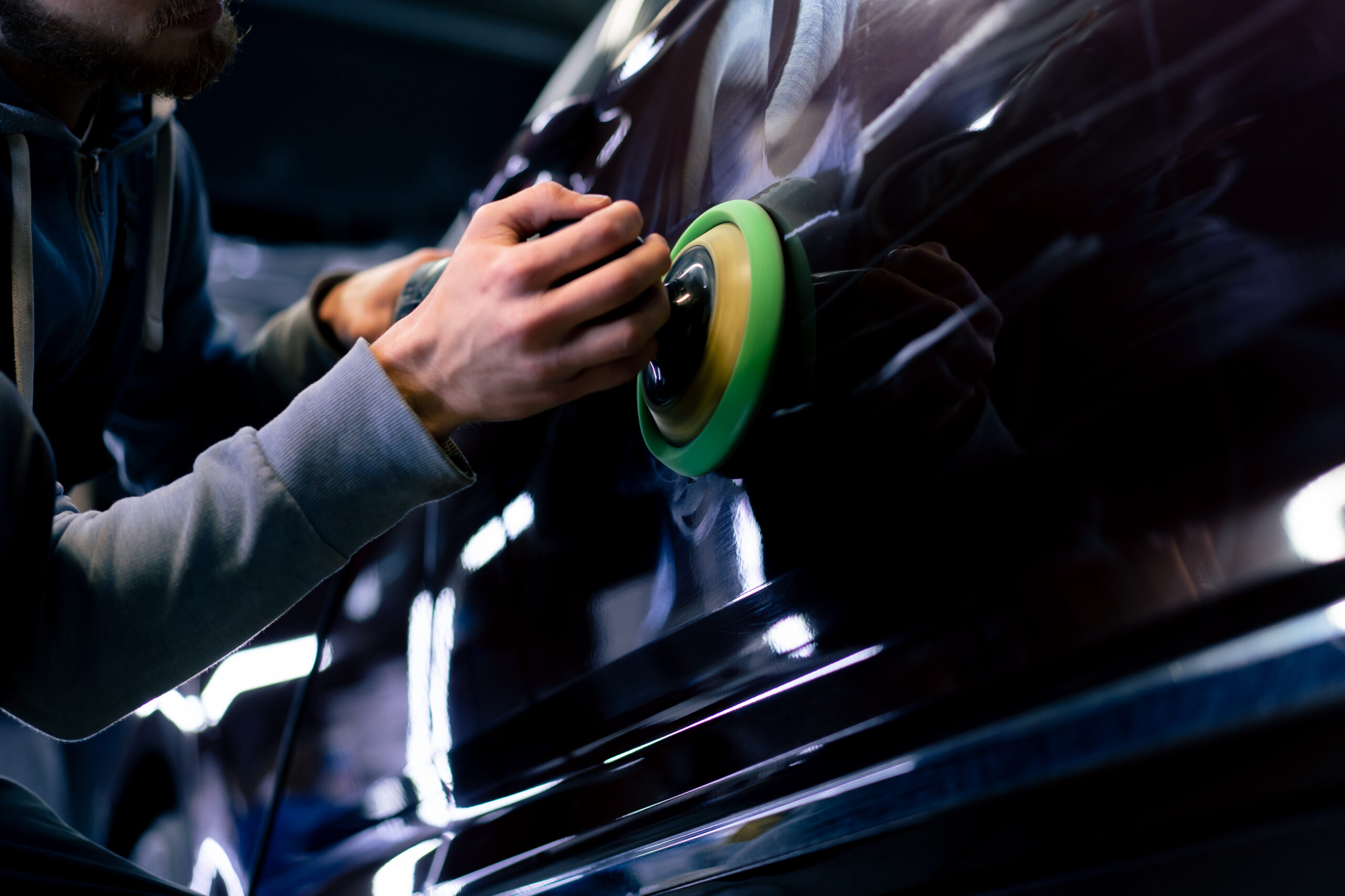
Once minerals have etched the clear coat, nothing you spray on will remove the outline. The damage is a tiny dip in the surface, so the only fix is to carefully level the surrounding clear coat with a machine polisher. That's paint correction.
- 1-step correction removes roughly 60–70% of swirls and light defects, and handles many light etchings.
- 2-step correction removes roughly 85–95% and brings paint close to a mirror finish.
- Very deep etching can't always be removed fully without taking off too much clear coat. A good detailer will tell you that up front.
- Glass etching is harder to fix than paint, which is why it pays to deal with spots on windows early.
For a closer look at how polishing works, read paint correction explained. If your spots are mostly on glass or a recent problem, our water spot removal service page explains what we can do.
Water Spots on Windows and Windshields
Glass often takes the worst of it, because side windows face the sprinklers directly and windshields sit in full sun. Mineral spots on glass make it hard to see when you're driving into a low sun or at night, when headlights from oncoming traffic catch every ring.
Fresh spots on glass usually come off with a glass cleaner made for cars or a water-spot remover that's labeled safe for glass. If you have aftermarket window tint, remember that the tint film is on the inside of the glass, so outside-only treatments won't affect it, but keep ammonia-based household cleaners away from the inside of tinted windows entirely. Wipe with a clean, flat-weave microfiber and buff dry.
If the spots still show after cleaning, the glass may be etched. Glass is much harder than clear coat, so etching there is slower to form but also harder to remove. That's another reason to deal with sprinkler spots on windows quickly. Once the glass is clean, a glass sealant helps water sheet off so it doesn't sit and dry in drops.
Don't forget the mirrors and the black plastic trim around the windows. Minerals dry there too, leaving chalky white patches that look like faded plastic. A gentle trim cleaner and a water-based dressing usually bring them back.
How to Stop Water Spots From Coming Back
Prevention is mostly about keeping mineral water off the car and not letting it dry there.
- Park out of sprinkler range, or adjust the heads that reach the driveway.
- Check that irrigation runs at times your car isn't parked nearby.
- Dry the car fully after washing, including mirrors and trim.
- Wash in the shade or early in the day.
- Keep a sealant or ceramic coating on the paint and glass.
- Don't let the car air-dry in the sun after a wash.
- Don't wipe dry spots with a dry towel. That can scratch.
- Don't wait weeks to clean fresh sprinkler spots.
- Don't use abrasive pads or household cleaners on paint or glass.
A ceramic coating won't make your car immune to spots. If mineral-heavy water dries on any surface, it leaves something behind. What a coating does is make those deposits much easier to remove and slow down etching, which buys you time. If you're considering one, our ceramic coating page covers the 2-Year, 6-Year and 10+ Year options.
Why We Wash With Deionized Water
One reason water spots are so common is that most people wash with the same mineral-laden water that causes them. We bring our own deionized, spot-free water to every job. Because the minerals are removed before it ever touches your car, the final rinse dries clean instead of leaving a fresh set of spots behind.
If the water that washes your car leaves minerals behind, you're just trading dirt for spots. Clean water is the first step to a clean finish.
— Prince's Mobile Detailing, St. AugustineOur crews come to your driveway or office lot anywhere from St. Augustine to Ponte Vedra Beach, with generator power and water on board. Pick your vehicle and service on our online booking page to see your exact price, or call (904) 593-9265 if you'd like us to take a look at etched spots first.
More From the Prince's Mobile Detailing Blog
Frequently Asked Questions
Yes, if it's left to dry repeatedly. The minerals bond to the surface, and in strong sun they can etch the clear coat. Clean fresh spots promptly and park out of sprinkler range.
Fresh spots usually come off with a quick detailer or a dedicated water-spot remover used on cool paint, followed by a rinse. Bonded spots may need clay. Etched spots need machine polishing.
A diluted vinegar solution can help with light deposits, especially on glass, but test it first, keep it off hot panels, rinse thoroughly and never mix it with other cleaners. A purpose-made water-spot remover is the safer choice for paint.
Not completely. Coated paint still shows spots if mineral water dries on it, but they wipe off far more easily and are slower to etch. Drying the car properly still matters.
Clean the area well, then look at it in sunlight or under a flashlight at an angle. If you still see a ring outline even though the surface is clean and smooth, it's likely etched and needs paint correction.
Get Rid of Water Spots for Good
Book a spot-free wash, decontamination or paint correction and see your exact price online.
See My Price & Book