
Northeast Florida summers bring afternoon thunderstorms almost daily, and humidity that never really leaves. Leave a window cracked during one of those storms, or let a wet towel sit on the floor after a day at Vilano Beach, and a closed car turns into a warm, damp box. A few days later you notice the smell: musty, like a basement. Sometimes you see white, green or dark spots on seat belts, carpet or the headliner. This guide covers what causes it, what you can safely do, and when it is time to get help.
A musty smell or fuzzy spots in your car usually mean trapped moisture. Find and stop the water source first, such as a window left open, a clogged drain or a failed seal. Dry the interior completely. Small surface spots can be cleaned with care; widespread growth needs professional help, and see a doctor for any health concerns.
Why Cars Get Musty in Florida
Mold and mildew need moisture, warmth and something to feed on. A car parked in the Florida sun provides all three. Carpet padding holds water like a sponge, and fabric, food crumbs and skin oils give growth a place to start. Because the cabin is sealed, damp air has nowhere to go.
Common moisture sources
- Windows or a sunroof left open during a storm
- Clogged sunroof drains or A/C drain lines
- Worn door, window or trunk seals
- Wet beach towels, swimsuits, umbrellas or gym clothes left inside
- Spilled drinks that were never fully dried
- Storm or flood water. If floodwater got into the cabin, contact your insurer and have a mechanic inspect the car before anything else.
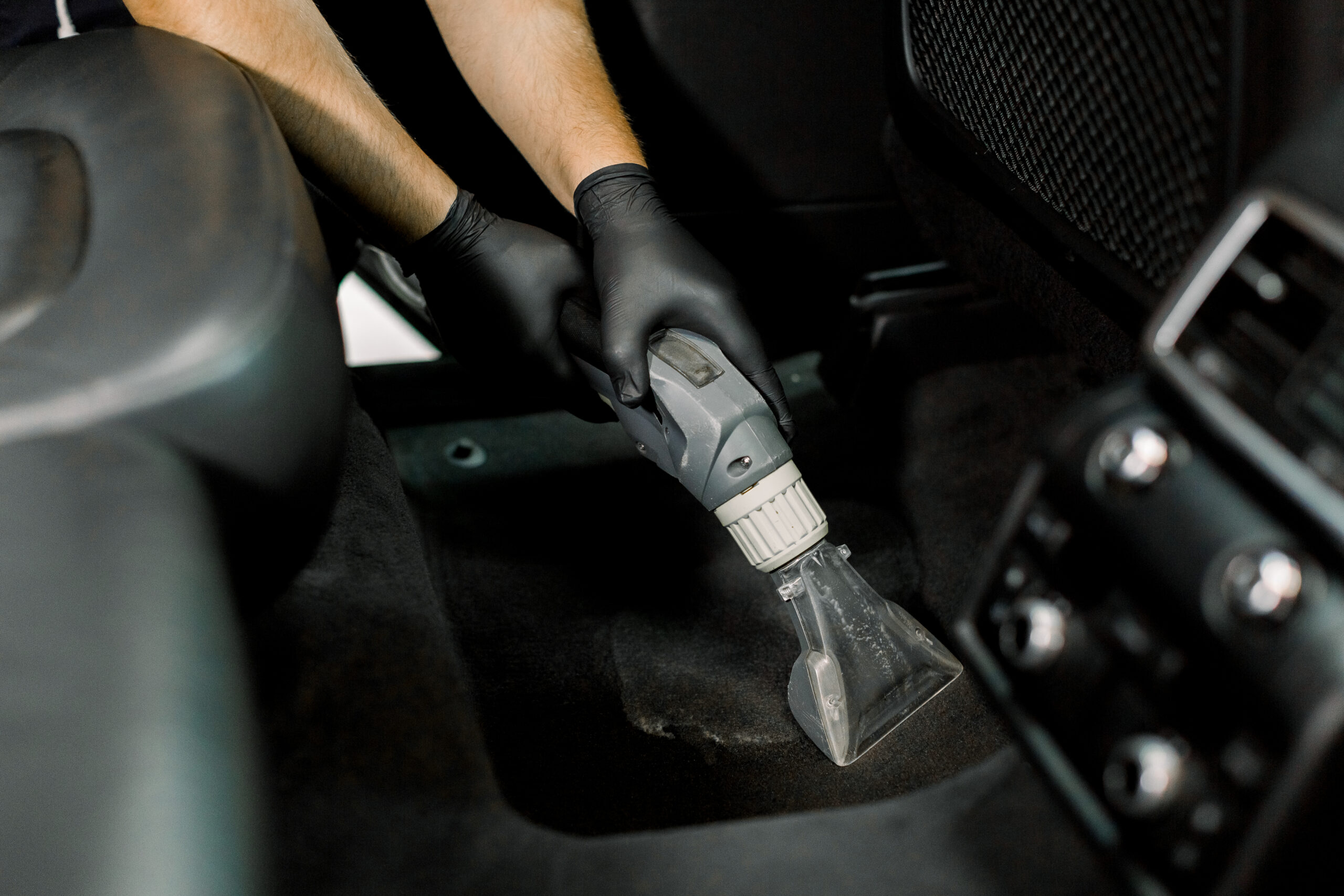
People often use the word mildew for a musty smell and flat, powdery spots, and mold for fuzzier growth that can be white, green or black. From a car-care point of view, the steps are the same: find the water, dry the car, clean carefully, and get professional help if the growth is widespread. We are not able to identify what kind of growth you have, and you should not need to in order to take the right next step.
Step One: Find and Stop the Water
Cleaning without fixing the source means it comes back after the next storm. Check these spots after it rains or after a careful garden-hose test with a helper inside watching for drips.
- Press on the carpet near each door and under the front seats
- Lift the floor mats and feel the carpet beneath
- Check the spare tire well in the trunk
- Look at the headliner around the sunroof and the tops of the pillars
- Look for water lines or stains on door panels
- Watch for fog on the inside of the glass that does not clear
Seals, drains and body leaks are repair work for a mechanic or body shop. A detailer can clean and dry the inside, but cannot fix a leaking seal.
Sunroof and A/C drains
Sunroofs are designed to let some water past the glass and carry it away through small drain tubes that run down the pillars. In neighborhoods full of oak and pine trees, those drains can clog with leaves, needles and pollen. When they do, water backs up and can come down the headliner or into the footwells. The A/C system also drains condensation under the car, and a blocked line can send water into the cabin. Some owner's manuals describe how to check these drains; otherwise a mechanic can clear them.
What You Can Safely Do Yourself
For a light musty smell or a few small surface spots in a car with no ongoing leak, careful DIY cleaning can be reasonable. For anything more, skip ahead to the next section.
Protect yourself
Work outdoors with the doors open. Wear gloves, and consider a mask and eye protection. If you have allergies, asthma or other health concerns, let someone else do it or call a professional.
Dry everything
Remove mats and wet items. Park in the sun with the windows down when rain is not expected, and use fans or a wet-dry vacuum to pull water from the carpet. Drying is the most important step.
Vacuum carefully
Use a vacuum with a good filter on dry areas, and empty it outdoors.
Clean hard surfaces
Wipe plastic, vinyl and seat belt buckles with an automotive interior cleaner. Test it in a hidden spot first and follow the label.
Replace the cabin air filter
A damp filter can keep the A/C smelling musty even after the interior is clean.
- Fix the leak first
- Dry the car thoroughly
- Wear gloves and work in fresh air
- Follow every product label
- Ask a doctor about any health concerns
- Do not use household bleach or ammonia in the car
- Do not mix cleaning products
- Do not soak the headliner or seats
- Do not just spray air freshener over it
- Do not close the car up while carpet is still damp
When to Call a Professional
Get professional help when the problem is bigger than a few spots. That includes visible growth across large areas of carpet or seats, growth in the headliner, a smell that returns after cleaning, any car that had standing water inside, or anyone in the household with health concerns. Depending on the extent, that might be a professional interior cleaning, or for severe cases, a mold remediation specialist or a body shop. If you have symptoms or worries about exposure, talk to a doctor. We do not give medical advice.
- Hot-water extraction pulls moisture, residue and odor out of seats and carpet.
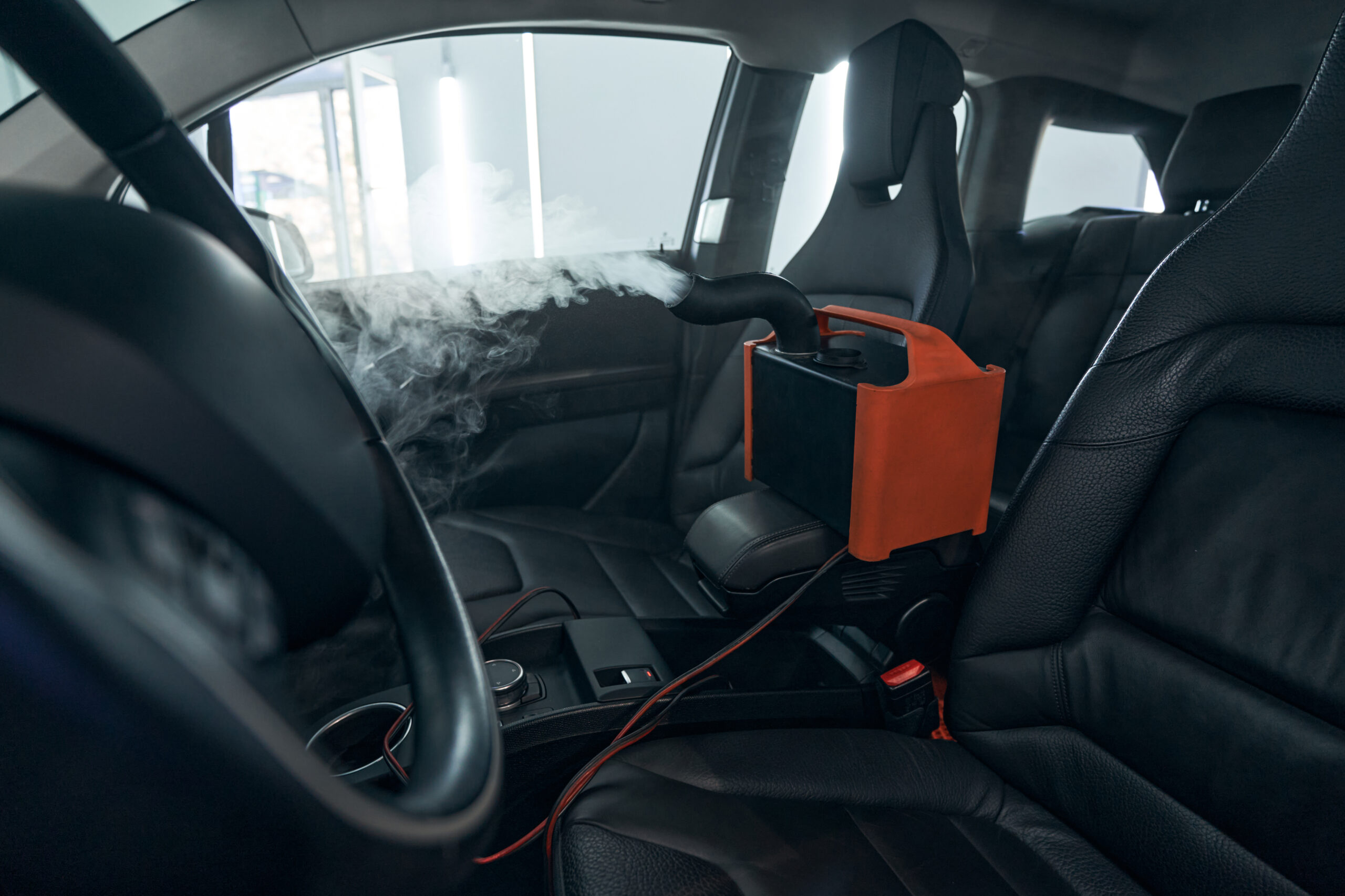
- Full interior steam treatment reaches seams, vents and hard surfaces.
- Our Ultimate Odor Elimination Treatment uses chlorine dioxide to destroy mildew odors rather than mask them.
- We will tell you honestly if what we see is beyond a detail and needs a specialist or a repair.
The Interior Only Full Detail includes extraction, full interior steam, headliner spot treatment and odor treatment on request, so it lines up well with a musty car after the leak is fixed. If the smell is mostly odor rather than visible growth, our guide to car odor removal goes deeper, and seat shampooing explains how extraction works.
When you book, it helps to tell us when the water got in, whether the leak has been fixed, and how much of the interior is affected. Photos are useful too. That way we can tell you honestly whether it is a job for an interior detail or something that needs a specialist first.
Preventing It Next Time
- Close windows and the sunroof before afternoon storms roll in, even for a quick stop.
- Take wet towels, swimsuits and gear out the same day.
- Use rubber floor mats during the rainy season so water does not reach the carpet.
- Run the A/C on fresh air for a few minutes before shutting the car off in humid weather.
- Keep drains clear and have worn seals checked during routine service.
- Before hurricane season, review our hurricane prep and storm cleanup guide.
If the car will sit for a while, such as during a long trip or a summer away, start with a clean, dry interior, close everything tightly, and use a sunshade. Take out anything damp or food-related. A car that is closed up clean and dry is far less likely to greet you with a musty smell when you get back.
Fix the water, dry the car, then clean. In that order, every time.
— Prince's Mobile Detailing, St. AugustineWe work throughout St. Augustine, Vilano Beach and the rest of St. Johns County, bringing our own generator power and water. When the leak is fixed and you are ready, book an interior detail online and see your exact price instantly, or call (904) 593-9265 to talk it through first.
More From the Prince's Mobile Detailing Blog
Frequently Asked Questions
Usually because water got in and is trapped in the carpet padding or seats. Check for open windows, clogged drains or worn seals, then dry the interior completely before cleaning.
Small surface spots in a car with no ongoing leak can often be handled with gloves, fresh air, thorough drying and automotive interior cleaners. Widespread growth, growth in the headliner or a flooded car needs professional help.
No. Household bleach can damage interior materials and tint, and mixing it with other cleaners is dangerous. Use automotive products and follow the label, or call a professional.
We are not medical professionals and cannot answer that for you. If you have symptoms or concerns, please talk to a doctor, and have the car cleaned by someone else in the meantime.
No. Leaks from seals, drains or body damage need a mechanic or body shop. We clean, steam and deodorize the interior once the source is fixed.
Get the Musty Smell Out
Once the leak is fixed, book a mobile interior detail and see your exact price online.
See My Price & Book