
A car is a small, sealed box that sits in the Florida sun. Whatever gets into it, a cigarette, a wet dog, a sippy cup that rolled under the seat in July, gets baked in and released again every hot afternoon. That is why air fresheners never really win: they add a smell on top of the one that is already there. This guide walks through the three odors we get asked about most, how to track down the source, and what an interior detail does that a spray can cannot.
Lasting car odor removal means removing the source, not covering it. Find and clean the spill or residue, vacuum and shampoo the fabric and carpet, wipe hard surfaces, and replace the cabin air filter. For smoke, pet or soured-milk odors that soaked into foam and headliner, a chlorine dioxide (ClO2) treatment finishes what cleaning starts.
Rule One: Find the Source
Every odor has a physical source: residue, a spill, oils, or moisture. Until that is gone, the smell comes back. Before buying any product, spend ten minutes looking.
- Under and between the seats, including the seat tracks
- Under the floor mats and in the carpet beneath them
- Seat-back pockets, door pockets and cup holders
- Child car seats and the fabric underneath them
- The trunk or cargo area, including the spare tire well
- The headliner, especially in a smoker's car
- The cabin air filter
- Damp carpet near the doors or sunroof drains
If the carpet is damp and you cannot find a spill, the smell may be mildew from a water leak. That is a different problem with different steps, covered in our post on mold and mildew in your car after Florida rain.
Spilled Milk and Food
Milk is the one that surprises people. It smells fine for a day, then sours in the heat and soaks into carpet padding, where it keeps smelling for weeks. Speed matters most.
Blot, do not rub
Soak up as much liquid as you can with clean towels, pressing down. Rubbing pushes milk deeper into the fibers.
Rinse with cool water
Dampen the area with cool water and blot again. Repeat a few times. Hot water can set milk proteins.
Use an enzyme cleaner made for upholstery
Enzyme cleaners break down protein residue. Test in a hidden spot first and follow the label for dwell time.
Extract and dry
Blot or wet-vac out the cleaner, then dry the area fully with the windows down or a fan. Lingering moisture creates a new smell problem.
If the spill reached the padding under the carpet, surface cleaning will not reach it. Hot-water extraction pushes clean water down and pulls it back out with strong suction, which is the reliable fix. More on that in when your car needs seat shampooing.
Pet Odor
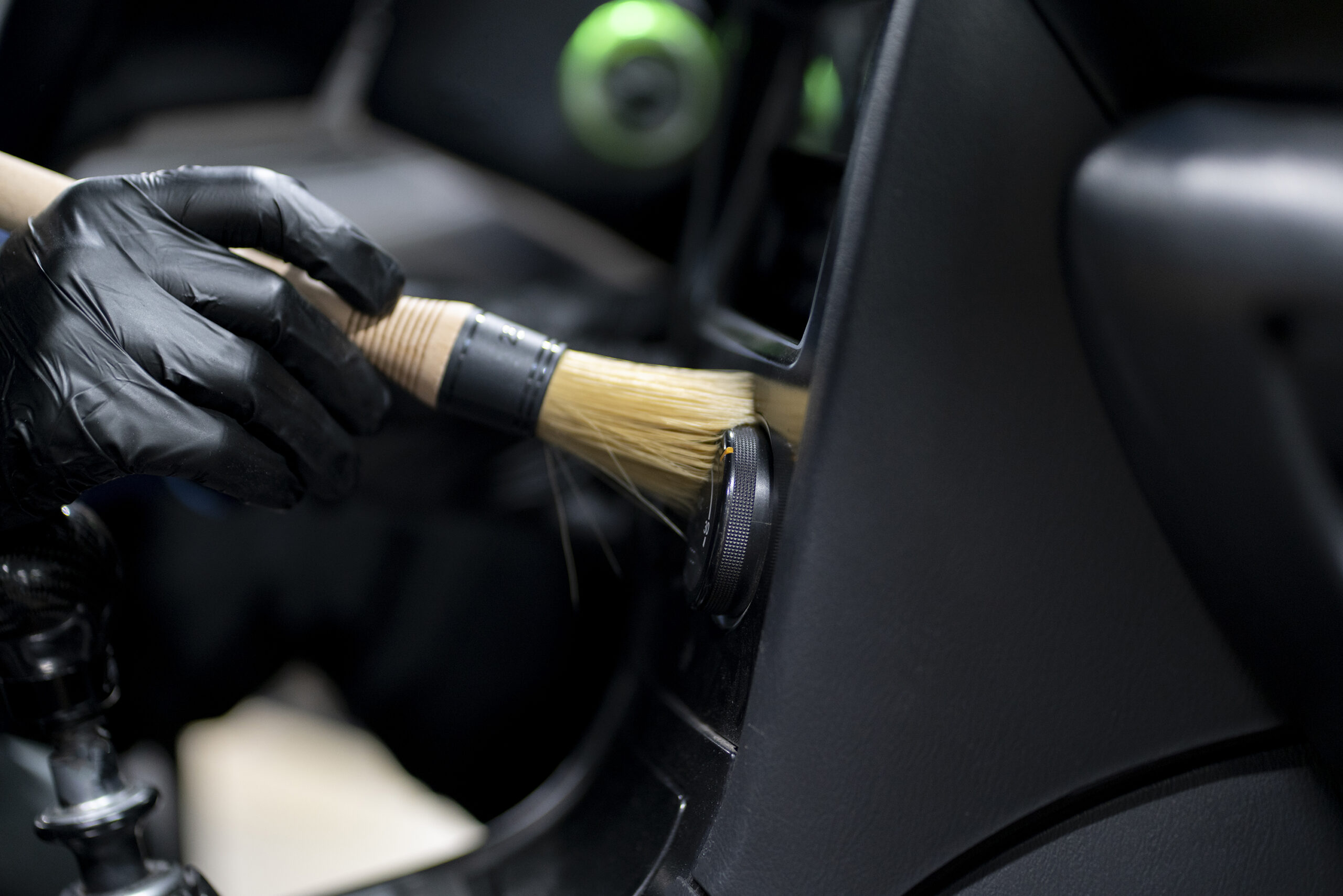
Dog smell comes from skin oils, saliva, wet fur and the occasional accident. It collects in fabric seats, carpet and the cargo area, usually alongside a layer of hair. Do the hair first; our guide on getting pet hair out of seats and carpet covers the method. Then shampoo the fabric where the dog rides and wash any seat covers or blankets.
For accidents, treat it like milk: blot, rinse, enzyme cleaner, extract, dry. Do not use household cleaners with ammonia. Besides being unsafe for car interiors, they smell like urine to a dog and can invite a repeat.
Formula, drinkable yogurt and protein shakes behave the same way as milk, so treat them with the same urgency. Kids' snacks and fast-food spills are less dramatic but add up over time, especially in seat tracks and between the seat and the console, where you cannot see them.
Cigarette and Cigar Smoke
Smoke is the hardest of the three because it is not in one spot. Tar and residue coat every surface: headliner, glass, vents, seat foam, seat belts and the HVAC system. A thorough approach covers all of them.
- Wipe every hard surface, including the inside of the glass, which often has a yellow film.
- Shampoo seats and carpet with hot-water extraction.
- Spot-treat the headliner gently. It is glued fabric, so soaking it can cause sagging.
- Replace the cabin air filter.
- Finish with an odor treatment that reaches the air system and the porous materials you cannot scrub.
Be realistic about heavy, years-long smoking. A thorough cleaning plus treatment makes a large difference, but deeply absorbed smoke in foam can sometimes return faintly on very hot days. Anyone who promises otherwise without seeing the car is guessing.
When the smell comes from the vents
If the odor is strongest the moment you turn on the air conditioning and fades after a few minutes, the source may be in the HVAC system rather than the seats. A clogged or damp cabin air filter is the easiest thing to check. On many cars it sits behind the glove box and can be swapped in a few minutes by following your owner's manual. If a musty smell continues after a new filter, moisture in the A/C system or a blocked drain line may be the cause, and that is a job for your mechanic or an A/C shop. Interior cleaning and an odor treatment help the cabin, but they cannot fix a drain that is not draining.
What Does Not Work (and What Is Unsafe)
- Remove the source before treating the air
- Test any cleaner in a hidden spot
- Follow product labels exactly
- Dry fabric completely after wet cleaning
- Replace the cabin air filter
- Do not use household bleach or ammonia inside the car
- Do not mix cleaning products
- Do not soak the headliner
- Do not rely on air fresheners to fix the problem
- Do not leave damp carpet closed up in the heat
Air fresheners, coffee grounds and dryer sheets can make a car smell different for a while, but they leave the source in place. Baking soda on dry carpet can absorb some odor before vacuuming, which is fine for light smells, but it will not touch smoke in a headliner or milk in the padding.
How a Professional Odor Treatment Fits In
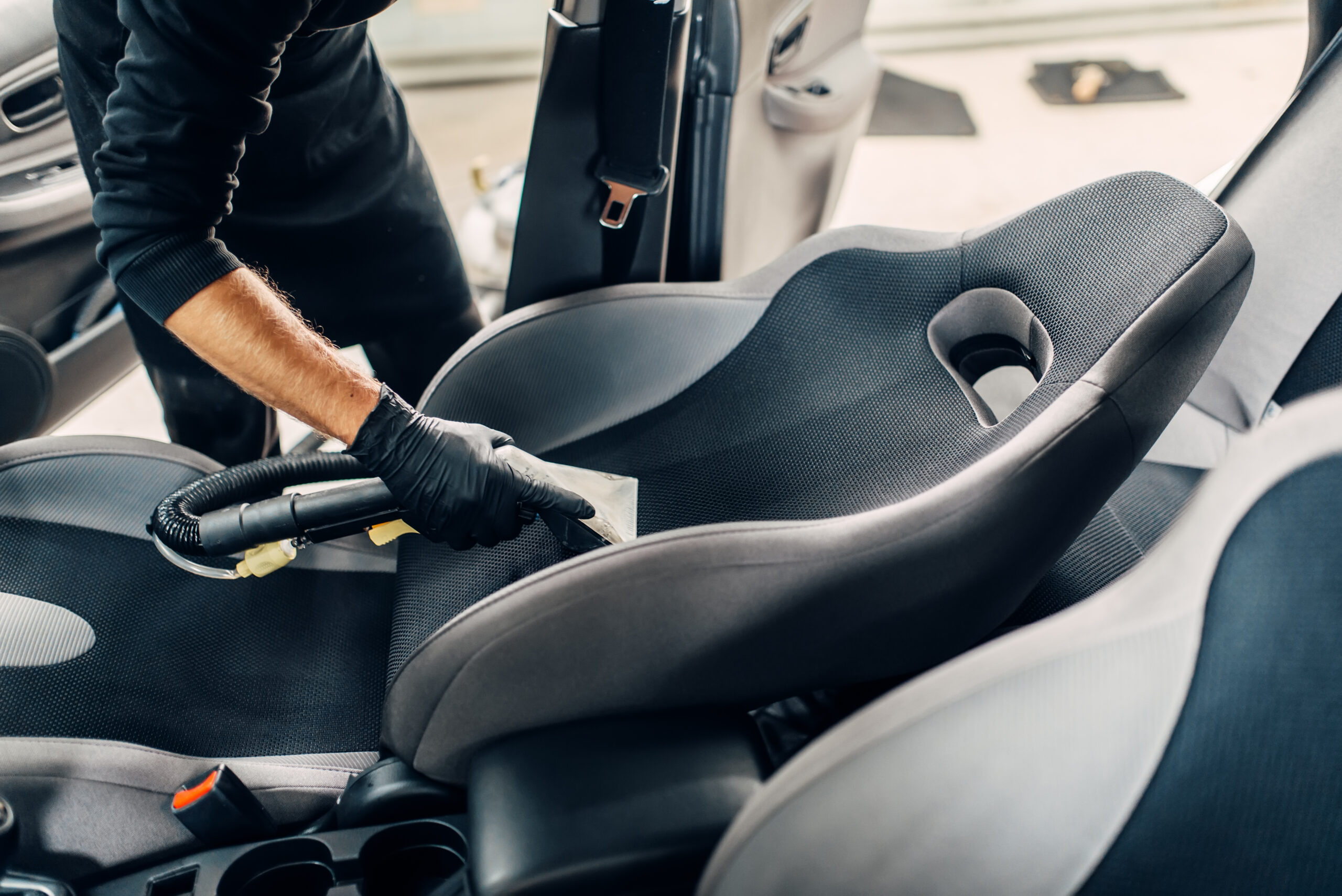
Our Ultimate Odor Elimination Treatment uses chlorine dioxide (ClO2), which destroys smoke, pet, food and mildew odor molecules instead of masking them. It works best as the final step after the interior has been deep cleaned, because no treatment can keep up with a source that is still sitting in the carpet.
| Interior Only Full Detail | Full Detail Package | Prince's Royal Package | |
|---|---|---|---|
| Hot-water extraction of seats and floors | Yes | Yes | Yes |
| Pet hair removal | Yes | Yes | Yes |
| Full interior steam | Yes | No | Yes |
| Headliner spot treatment | Yes | No | Yes |
| Odor treatment | On request | Add-on | Odor elimination included |
| Exterior work | No | Yes | Yes, plus paint correction |
For most odor problems, the Interior Only Full Detail with the odor treatment is the right match. If the outside needs attention too, the Full Detail Package with the odor add-on covers both. You can compare everything on our interior detailing page.
What to expect afterward
Cleaning removes most of the source, and an odor treatment handles what is left in the air system and porous materials. After any odor treatment, it helps to let the car air out. Drive with fresh air rather than recirculate for the first day or two and crack the windows when it is dry outside. If the original smell returns weeks later, that usually means something new happened, like a fresh spill or a water leak, or a source was hidden somewhere that was not reached. Tell your detailer what you notice and where, because the location of a smell is the best clue to its cause.
Getting It Done Without Leaving Home
We are fully mobile, with our own generator power and water, so we can work in your driveway or apartment lot in St. Augustine, St. Johns and nearby towns. Please take out personal belongings before we start, and be around at the end to inspect the car and pay.
Selling a car that a smoker owned? A fresh-smelling interior matters to buyers, and our post on detailing before you sell or trade in covers what else to fix. When you are ready, book online to pick your package and odor add-on and see your exact price instantly, or call (904) 593-9265.
More From the Prince's Mobile Detailing Blog
Frequently Asked Questions
Blot up the spill, rinse with cool water, then use an upholstery enzyme cleaner and dry the area completely. If milk soaked into the padding, hot-water extraction is usually needed to reach it.
A full cleaning of every surface, shampooing, a new cabin air filter and a ClO2 odor treatment make a large difference. In cars with years of heavy smoking, a faint smell can sometimes return on very hot days, so it is honest to set expectations.
No. They cover odors temporarily. The smell returns once the fragrance fades because the source is still in the fabric or carpet.
Chlorine dioxide is used to destroy odor molecules from smoke, pets, food and mildew rather than mask them. Our Ultimate Odor Elimination Treatment uses it after the interior is cleaned.
No. Household bleach and ammonia can damage interior materials and window tint, and mixing cleaners is dangerous. Use products made for automotive upholstery and follow the label.
Ready for a Car That Smells Clean?
Pick an interior detail and the Ultimate Odor Elimination Treatment online and see your exact price right away.
See My Price & Book