
Every spring, Northeast Florida turns yellow. Pine and oak pollen settles on driveways, porches and, of course, your car, sometimes in a layer thick enough to write your name in. Around St. Augustine and the surrounding neighborhoods full of live oaks and pines, it can feel like the car is dusty again an hour after you wash it. Pollen is mostly a nuisance, but how you clean it matters. Here's how to deal with it on the paint, in the cabin, and when an exterior detail makes sense.
Never wipe dry pollen off your car. Rinse it away with plenty of water first, then hand wash with a pH-balanced shampoo. Keep a sealant or coating on the paint so pollen rinses off easily, and check your cabin air filter per the owner's manual. Vacuum vents and fabric to cut down on pollen inside.
When Pollen Season Hits Northeast Florida
Pollen season in North Florida typically starts in late winter and runs through spring. Trees lead the way, and pine pollen is the one most people notice because it's so visible: a fine yellow-green dust that coats cars, outdoor furniture and puddles. Oak pollen overlaps with it. Grasses and weeds carry on later into the year, though they're less noticeable on a car.
Exact timing shifts each year with temperatures and rainfall. A dry, windy stretch tends to make the coating on your car worse. A good rain washes some of it away, but then it can dry into streaky yellow residue, especially on the windshield and around trim.

How Pollen Affects Your Paint
A light dusting of pollen won't ruin your clear coat. The problems come from how it's handled and how long it sits.
- Scratching: Pollen grains are tiny, but a thick layer mixed with dust is gritty. Wiping it off dry, with a towel, your sleeve or a duster, drags that grit across the paint and leaves fine swirls.
- Residue and staining: When pollen gets wet from rain or dew and then bakes in the sun, it can leave a sticky film that's harder to wash off and may leave marks if ignored.
- Hiding other contamination: A yellow layer also hides sap mist, bird droppings and bug remains that need attention quickly.
- Clogged areas: Pollen packs into the cowl below the windshield, door jambs and trim seams, where it holds moisture.
If you park under trees, you're also likely dealing with sap. Our guide to tree sap and bird dropping removal covers that side of things.
How to Wash Pollen Off Without Scratching
The goal is to get as much pollen off as possible before anything touches the paint.
Wait for shade or a cool time of day
Washing a hot car in the sun dries soap and pollen into streaks. Early morning or evening is best.
Rinse thoroughly, top to bottom
Use a steady stream from a hose to float pollen off the roof, glass and hood. Take your time here. This step does most of the work.
Pre-soak if you can
A foam cannon or pump sprayer with car shampoo loosens what the rinse missed. Let it dwell, but don't let it dry.
Hand wash with two buckets
Use a pH-balanced car shampoo, a clean wash mitt, and a second bucket of plain water to rinse the mitt. Work from the top down.
Rinse and dry
Rinse well, including jambs and the cowl area, and dry with a soft microfiber towel so you don't trade pollen for water spots.
Add protection
Finish with a spray sealant or wax. A slick surface sheds the next layer of pollen far more easily.
- Rinse pollen off before touching the paint.
- Use plenty of clean water and a clean mitt.
- Clean the windshield and wiper blades separately.
- Open the hood and rinse pollen out of the cowl area gently, with the engine cool.
- Don't wipe pollen off with a dry towel or duster.
- Don't use dish soap. It strips protection.
- Don't run the wipers on a dry, pollen-covered windshield.
- Don't use household cleaners or mix chemicals.
Keeping Pollen Out of the Cabin
Pollen doesn't just sit on the outside. It gets pulled in through the ventilation system and tracked in on clothes and shoes. Once inside, it settles into carpet, fabric seats, vents and the headliner.
- Check or replace the cabin air filter as your owner's manual recommends.
- Use recirculate mode on heavy pollen days.
- Keep windows and sunroof closed when parked under trees.
- Vacuum floors, mats and fabric seats regularly.
- Blow out or brush dust from dash vents.
- Wipe hard surfaces with an interior-safe cleaner on a microfiber.
If you have seasonal allergies, a clean cabin and a fresh filter can cut down the amount of pollen you're sitting in on your commute. For health questions, talk with your doctor. We can't make medical claims, but we can make sure the pollen that's built up in your carpet and vents gets removed.
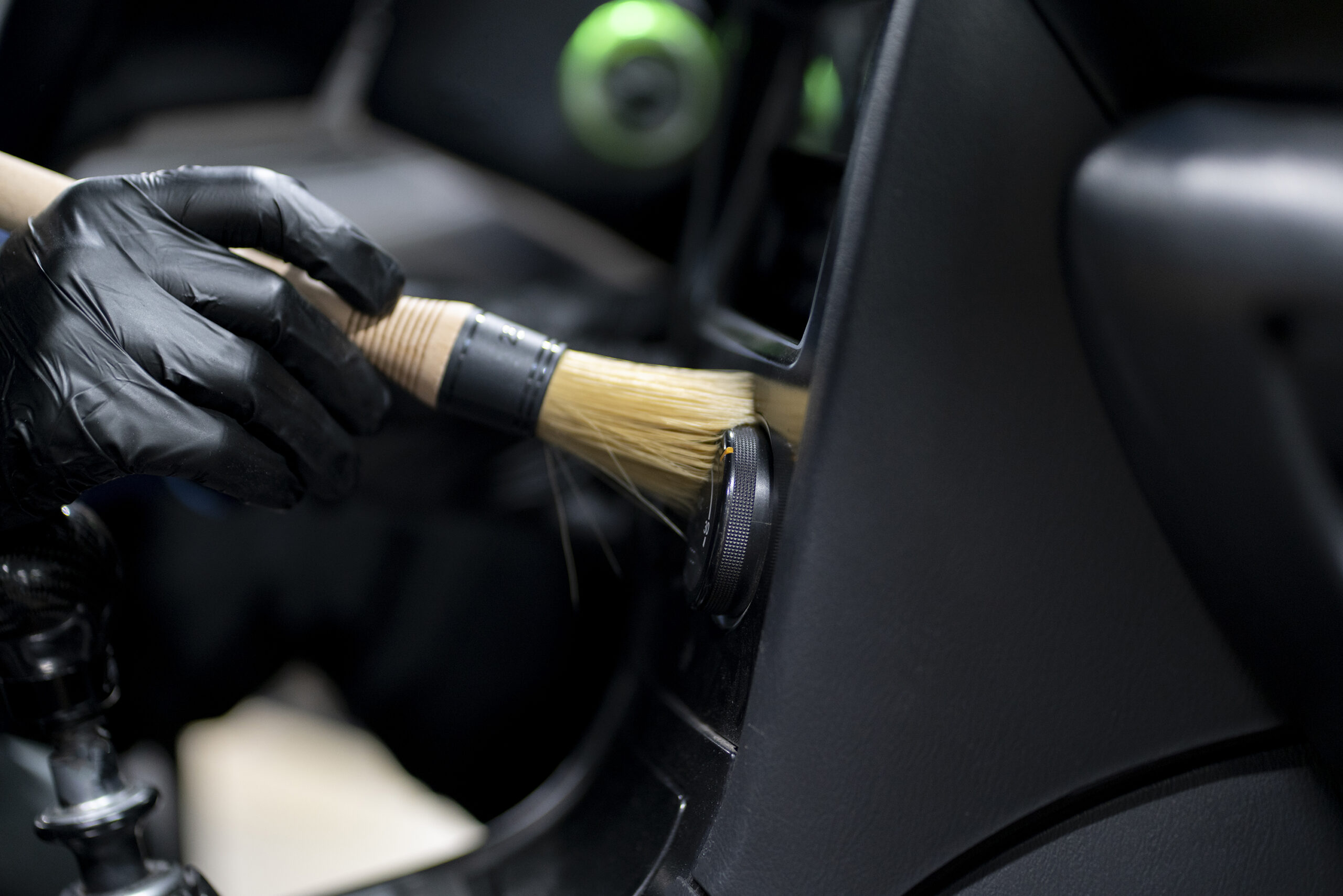
Every one of our interior services includes an air-tool blowout of vents and crevices along with a full vacuum. For a deeper clean, the Interior Only Full Detail adds hot-water extraction of seats and floors and a full interior steam, which pulls out what a vacuum alone leaves behind.
Protect the Paint Before the Season Starts
The best spring for your car is one where the pollen rinses right off. That comes down to protection applied before the season, ideally in mid-winter.
- Ceramic-infused wax in our Standard Detail Package lasts about 1–3 months.
- Ceramic sealant in our Full Detail Package lasts about 3–6 months and comes with clay decontamination.
- Ceramic coatings in 2-Year, 6-Year and 10+ Year options make pollen, sap and dust much easier to rinse off season after season.
- Protection doesn't make pollen stop landing. It makes it easier and safer to remove.
Not sure which to pick? Our breakdown of ceramic coating vs. wax vs. sealant compares how long each lasts and what it costs you in upkeep time.
The End-of-Season Reset
By late spring, most cars have been through weeks of pollen, rain and quick rinses, and lovebug season is right around the corner. It's a good moment for a thorough reset inside and out: clean the paint, decontaminate it, restore protection, and clean pollen out of the vents and carpet. That way your car heads into summer heat clean and sealed instead of carrying a spring's worth of residue.
Pay special attention to the areas pollen hides in. Open the doors and wipe the jambs, where yellow residue mixes with moisture and grime. Check the cowl, the plastic panel at the base of the windshield, for packed debris that can block drains. Pull out the floor mats and shake or wash them, since they catch most of what's tracked in on shoes. Clean the inside of the windshield, too. A hazy film builds up there over the spring and makes glare from the low morning sun noticeably worse.
If you'd rather not plan around the weather, a Maintenance Detail plan after an initial full detail keeps pollen from ever building up. Visits can be weekly, bi-weekly, monthly, bi-monthly or quarterly, and spring is when a more frequent schedule pays off most.
Pollen is easy on paint that's protected and rinsed. It's the dry wipe with a towel that does the damage.
— Prince's Mobile Detailing, St. AugustineWe come to driveways and office lots throughout St. Johns County, from Julington Creek to the beaches, with our own generator and deionized water. Pick your vehicle and package on our booking page to see your exact price, any day from 7AM to 7PM.
More From the Prince's Mobile Detailing Blog
Frequently Asked Questions
A light layer usually won't, but wiping it off dry can scratch the paint, and pollen that gets wet and then bakes in the sun can leave residue that's harder to remove. Rinse it off with water and wash it regularly.
Rinse thoroughly with a hose first to float off as much as possible, then hand wash with a pH-balanced car shampoo and clean mitt. Dry with a soft towel and add a spray sealant or wax.
Tree pollen typically runs from late winter through spring in North Florida, with pine pollen the most visible on cars. Timing varies year to year with the weather.
Check it against your owner's manual schedule, and look at it after a heavy pollen season. A clogged filter lets more pollen and dust into the cabin and can reduce airflow.
Yes. A coated surface is slick, so pollen and the grime that comes with it rinse off with less contact. See our ceramic coatings for options.
Get Through Pollen Season Clean
Book an exterior or full detail at your home and see your exact price instantly.
See My Price & Book